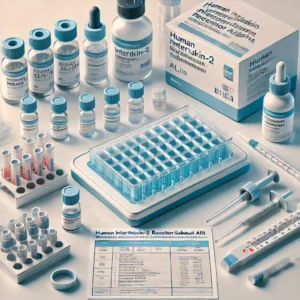
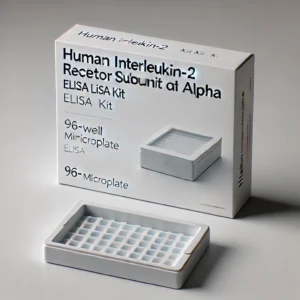
The Human Interleukin-2 Receptor Subunit Alpha (IL2RA), also known as CD25, is a key component of the interleukin-2 (IL-2) receptor complex. This molecule is essential for regulating immune cell function and maintaining immune system balance. The IL2RA ELISA kit has become a critical tool in both research and clinical diagnostics, enabling precise quantification of soluble IL2RA (sIL2RA) levels in various biological samples.
IL2RA: A Cornerstone of Immune Regulation
IL2RA binds to interleukin-2, a cytokine critical for T cell proliferation, differentiation, and survival. It is expressed in both membrane-bound and soluble forms. While the membrane-bound form is predominantly found on activated T cells and regulatory T cells (Tregs), the soluble form is released during immune activation and acts as a biomarker in numerous diseases.
For detailed information on the IL2-IL2RA signaling pathway, visit the National Cancer Institute (NCI) or NCBI.
Role of IL2RA in Health and Disease
1. Immune System Balance
IL2RA is vital for maintaining immune homeostasis by modulating the activity of Tregs, which prevent autoimmune reactions. Dysfunction in IL2RA signaling can lead to immune system hyperactivity, as discussed by the National Institute of Allergy and Infectious Diseases (NIAID).
2. Autoimmune Diseases
Increased sIL2RA levels are a hallmark of autoimmune diseases such as lupus, rheumatoid arthritis, and multiple sclerosis. Studies from the National Institutes of Health (NIH) have explored the potential of IL2RA as a diagnostic and prognostic marker for these conditions.
3. Cancer Biology
IL2RA is overexpressed in certain cancers, including Hodgkin’s lymphoma, non-Hodgkin’s lymphoma, and adult T-cell leukemia/lymphoma. Research from the American Cancer Society (ACS) highlights its role in tumor immune evasion and as a target for immunotherapy.
4. Transplantation
Soluble IL2RA is a marker of immune activation in transplant patients and can predict rejection episodes. Guidelines from the United Network for Organ Sharing (UNOS) emphasize its importance in post-transplant care.
IL2RA ELISA: Features and Benefits
- High Specificity and Sensitivity
The IL2RA ELISA kit is designed to detect low concentrations of sIL2RA with high precision, as supported by validation studies from NIH. - Wide Dynamic Range
The assay accommodates a broad range of sIL2RA concentrations, making it suitable for samples from both healthy individuals and patients with pathological conditions [PubMed]. - Robust and Reproducible
Manufactured under stringent quality control measures, the kit delivers consistent results, adhering to ISO standards for clinical diagnostics [FDA]. - User-Friendly Protocols
The ELISA kit includes optimized reagents and a step-by-step protocol, simplifying workflows for both novice and experienced researchers [CDC].
Research Applications
- Biomarker Discovery
IL2RA is widely used in biomarker research to identify signatures of immune activation. The National Science Foundation (NSF) supports studies investigating its utility in precision medicine. - Drug Development
Pharmaceutical companies utilize IL2RA assays to evaluate immunomodulatory effects of drugs, including IL2-based therapies. For more on therapeutic developments, visit the FDA. - Clinical Diagnostics
sIL2RA levels are used to diagnose and monitor autoimmune diseases, cancers, and transplant rejection. Guidelines from the World Health Organization (WHO) underscore its relevance in diagnostic workflows.
Technical Insights
- Sensitivity: Detects sIL2RA levels as low as 1 pg/mL in serum or plasma samples [NCBI].
- Cross-Reactivity: Minimal cross-reactivity ensures accurate measurement in complex biological matrices [NIH].
- Assay Time: The assay is completed within 2–3 hours, making it suitable for high-throughput applications [FDA].
For a detailed protocol, refer to resources from the Centers for Disease Control and Prevention (CDC).
Future Directions
- Therapeutic Targeting
Anti-CD25 monoclonal antibodies, such as daclizumab, are being developed to modulate IL2RA activity in autoimmune diseases and cancers [PubMed]. - Personalized Medicine
Measuring sIL2RA levels is paving the way for personalized treatment strategies in transplant immunology and oncology [NIH]. - Next-Generation ELISAs
Advances in ELISA technology, including multiplex assays, aim to provide simultaneous quantification of multiple immune biomarkers, improving diagnostic accuracy [NSF].
Conclusion
The Human IL2RA ELISA kit is an invaluable tool in immunological research and clinical diagnostics. Its precision, sensitivity, and versatility make it a preferred choice for studying immune responses and developing targeted therapies. As research progresses, IL2RA continues to reveal its significance in health and disease.
Explore additional resources at:
These links provide comprehensive insights into IL2RA’s role and applications in modern science.